Copy link succeeded! Now can share to friends.
There’s a hilarious classic story that’s been circulating among foreign Chinese learners for years, and it’s instantly relatable to anyone who’s ever stumbled over Chinese tricky tones.
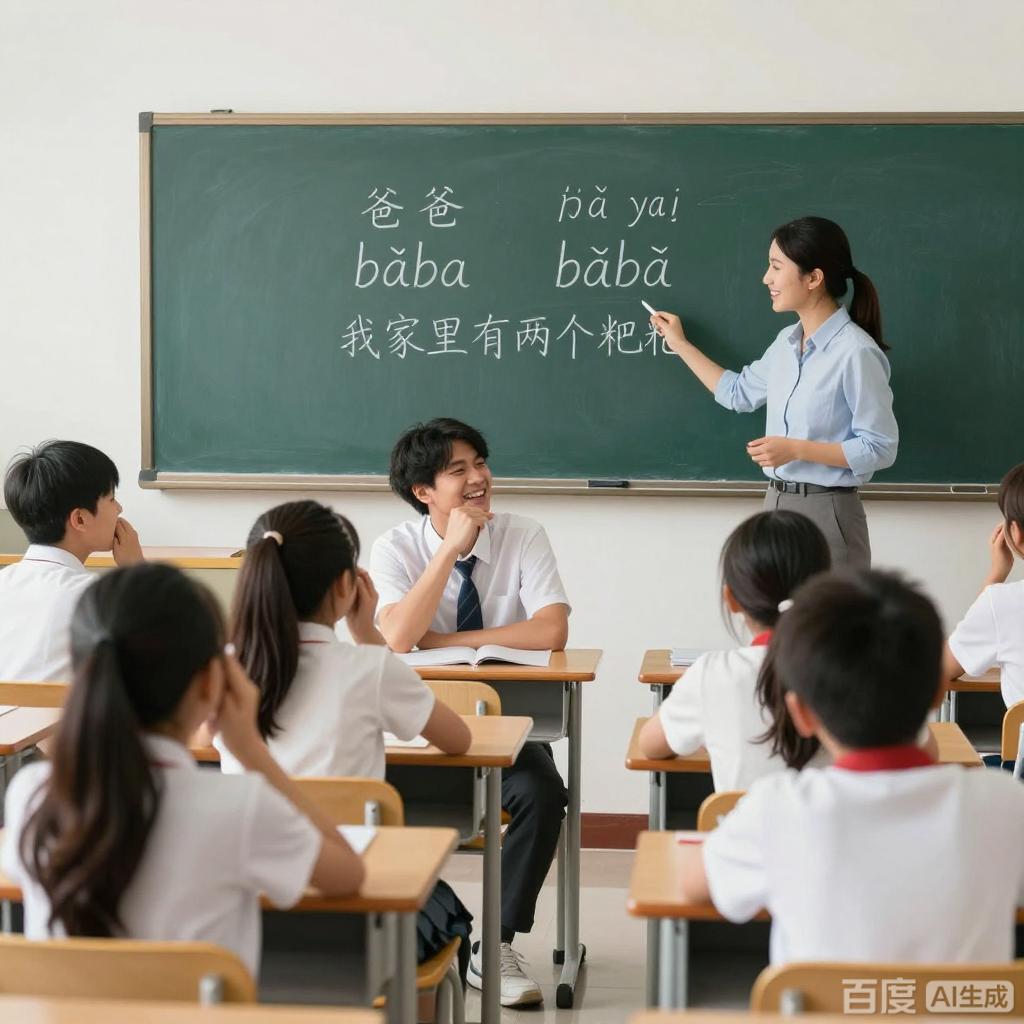
An American beginner who had just started his first month of Chinese lessons still couldn’t wrap his head around the four distinct tones, a common pain point for new learners whose native languages don’t use pitch changes to shift word meanings. One day during a small group practice session, the teacher asked every student to introduce their family members in simple Chinese sentences.
When it was his turn, he spoke proudly, trying his best to sound confident: “I live with my mom, and I have two 粑粑 at home.” The whole class went quiet for two seconds before bursting into uncontrollable laughter. The teacher was confused at first, then realized he had mixed up the fourth tone in “bàba (dad/father)” with the first tone, turning the word for father into “bābā”, a casual, childish Chinese term for poop.
The poor student had no idea why everyone was laughing until the teacher gently explained the two totally different meanings behind the same pinyin. He blushed bright red, but later turned the funny mistake into a running joke with his classmates. This story quickly became a go-to example for Chinese teachers all over the world, used to show new learners exactly how important getting the four tones right is, and how a tiny pitch shift can lead to a totally unexpected, hilarious misunderstanding.
For new learners who struggle with confusing tones, a one-on-one native Chinese tutor can give you real-time feedback on every single word you say, helping you avoid these funny but embarrassing mistakes while making steady progress in your Chinese learning journey.




Your first 1-on-1 Chinese lesson offer